The Arm v2.0 / v2.5
Now I have some extra money…
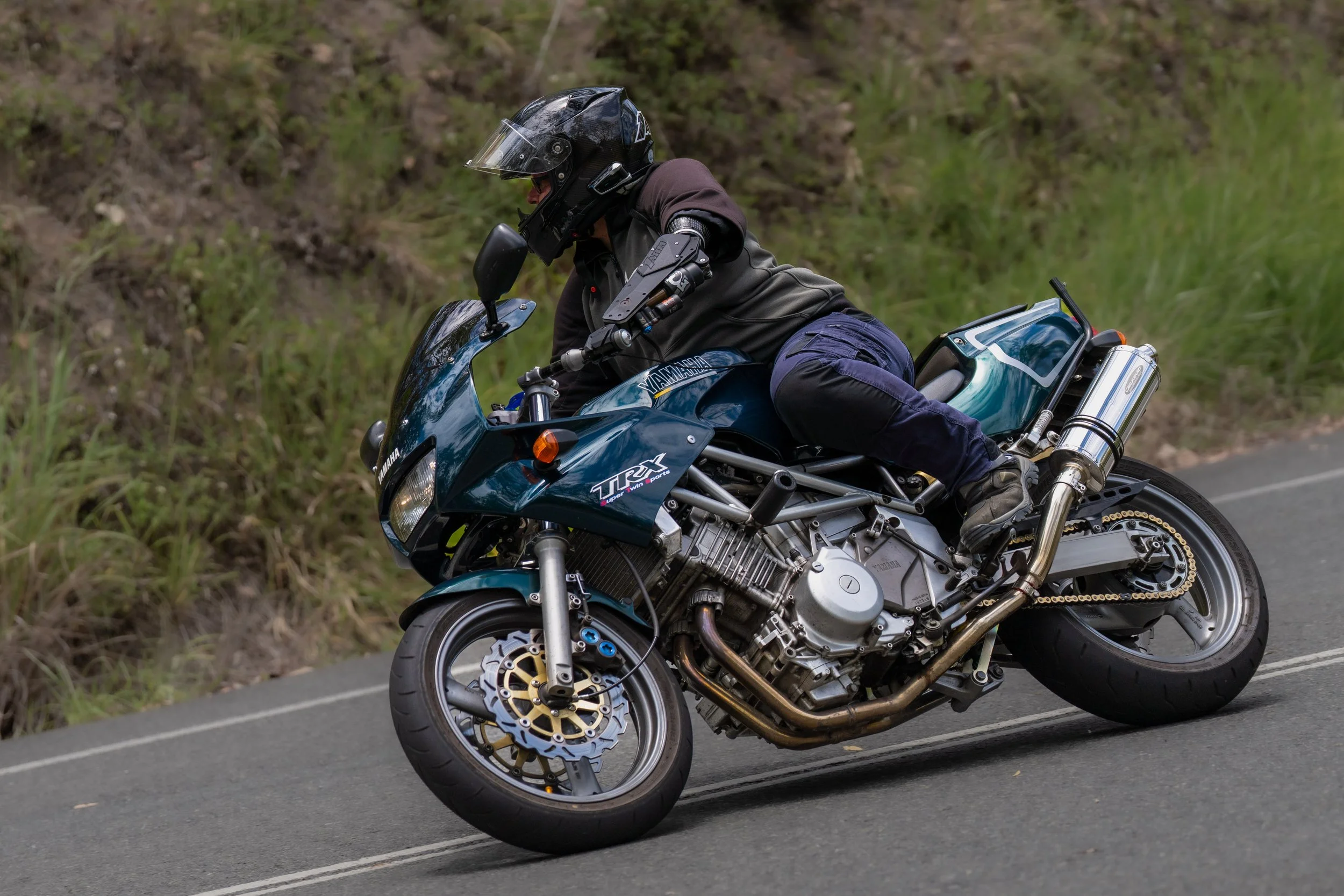
Version 2.0 was the first arm that finally gave me the full elbow articulation I’d been chasing. It still used the original hand, but the increased range of movement was such a big improvement that I was happy to live with the old hand while I spent the next six to eight months developing a new hand and quick‑release system.
The biggest drawback of v2.0 was weight. I had overestimated the material required and made the aluminium chassis plate much thicker than necessary, using 6mm 6061 aluminium. I was also still leaning heavily on machined alloy parts because I didn’t quite trust the newer 3D‑printed materials. The result was strong, but heavier than it needed to be - the arm, including socket and hand, weighed in at 2.8kilograms.
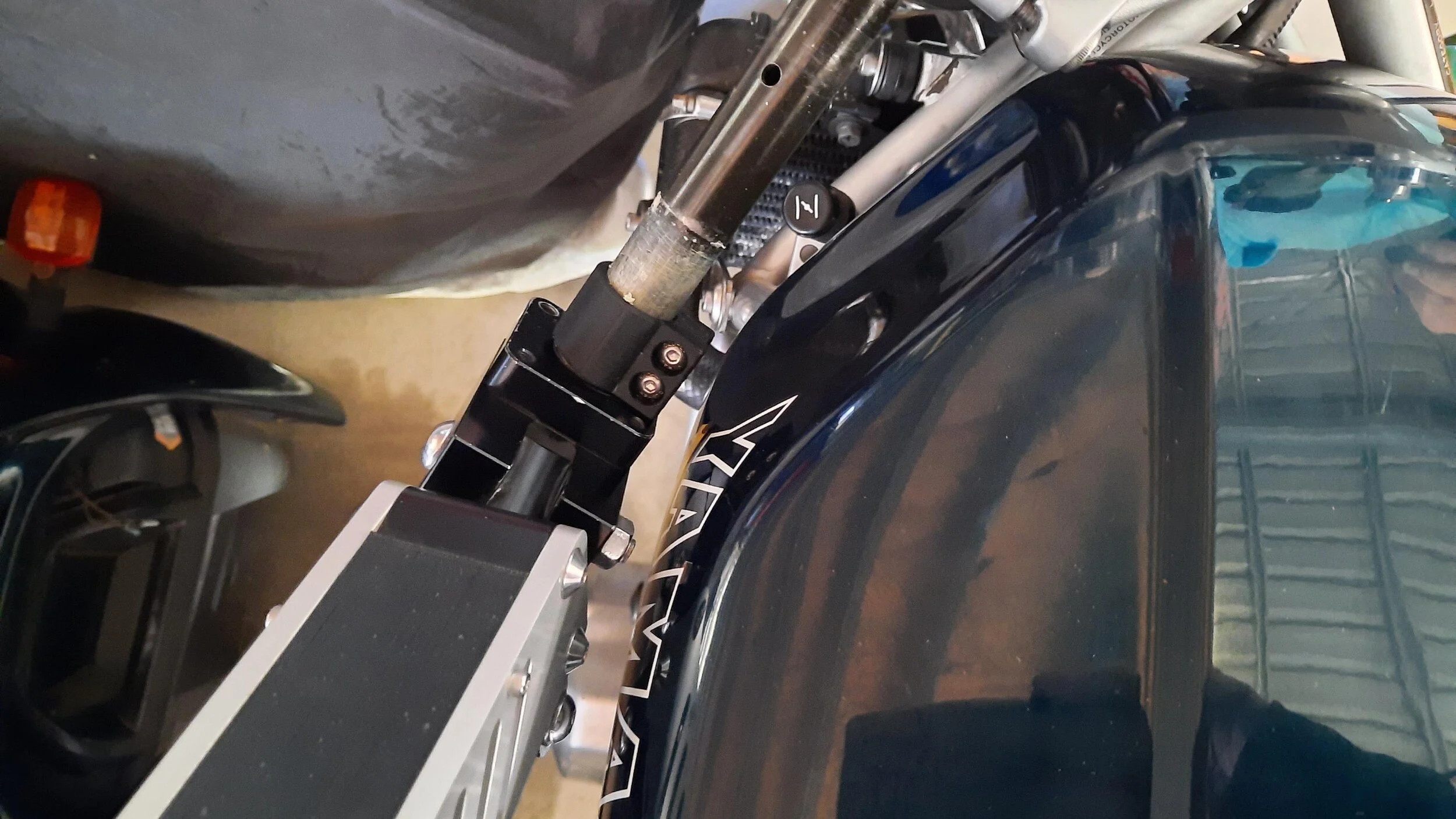
When I eventually built and installed the new hand and quick‑release, I used an all‑aluminium hand machined from a single billet. It looked very cool — I still have it in my box of arm parts — but it didn’t take long to realise it was a problem. It was a real danger to the paintwork on my bikes. In fact, the entire arm and hand were a hazard to paintwork on anything nearby: bikes, cars, small animals… You name it. There weren't any pronounced sharp edges, but when you combine the weight of the arm with my limited shoulder strength, you have a recipe for chipped paint and dents. Combine that with my growing dislike of the arm’s visual appearance, and it was clear another redesign was needed.
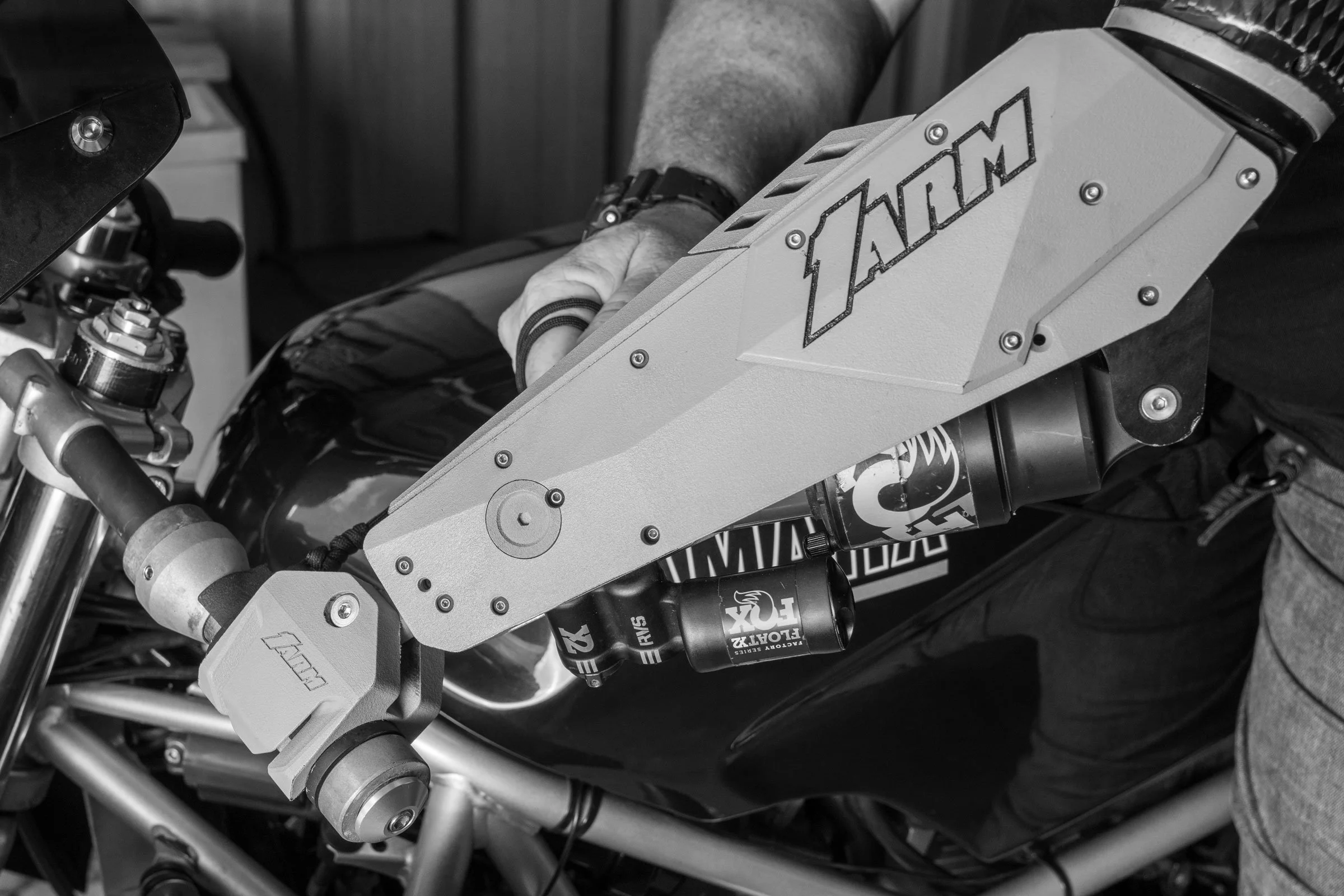
The redesign for version 2.5 focused on reducing weight, thinning material where possible, and making room for a removable outer shell. The shell served two purposes: improving the look of the arm and protecting the bike from accidental damage. I also experimented with 3D‑printed carbon fibre for some of the working components, had some spectacular failures, and reverted to machined and anodised aluminium where it made sense. I feel like I “could” have used 3D-printed carbon fibre in the arm's static components, possibly even to replace the two main chassis plates, but for the working components in my design, 3D-printed carbon fibre wasn't going to work. While I was in there, I adjusted the ratios of the working components to slightly increase the range of movement and make the arm feel a little lighter to use.
This stage was also where I took my first big gamble on 3D‑printed components. I started with the hand and quick‑release, swapping those parts out for 3D‑printed aluminium and fibre‑reinforced nylon. I was 3D printing at home, but only for test parts, for final use components, I was outsourcing the 3D printing - SLS/MJF being my preferred 3D printing process for final parts. I expected failures for a long time and had plenty of concerns about how the materials would handle extreme weather. But that first 'hand' design survived a full year of Queensland seasons — and yes, I ride in the rain, a lot.
With that confidence, I pushed the design further, experimenting with different release pressures and characteristics, still using 3D‑printed aluminium and nylon. Eventually, I arrived at the hand design I’m still using today. It has been through extreme conditions, crashes, and plenty of abuse — with no failures. Even after the crash where the arm and I ate the bitumen, the arm and hand (and to some degree “me”) survived without damage. Scuffs and bruising, yes — but nothing fractured, split, or presented as questionable.
What I like most about the system is how easy it is to get on and off the bike, and the fact that it doesn’t accidentally release or lose its grip. The lack of perceptible freeplay is another bonus — one of those things you don’t realise you needed until you have it. On long rides, I carry spare release clips and a spare hand, but I’ve never had to use them. If a clip fails, it’s usually because I stepped on it or misplaced it after taking it off. Where my previous tether was attached to my right wrist, I now tether to a belt loop on my pants — I’m no longer relying on the tether to release my hand. The quick‑release system now handles the involuntary dismounts.
The end result — version 2.5 — was an arm that shed around 400 grams, used far fewer machined parts, and cost slightly less to build than v2.0. More importantly, it felt like a better product. Both the arm and the hand had taken a big step forward.