The Arm v1.0
“Don’t spend any money”
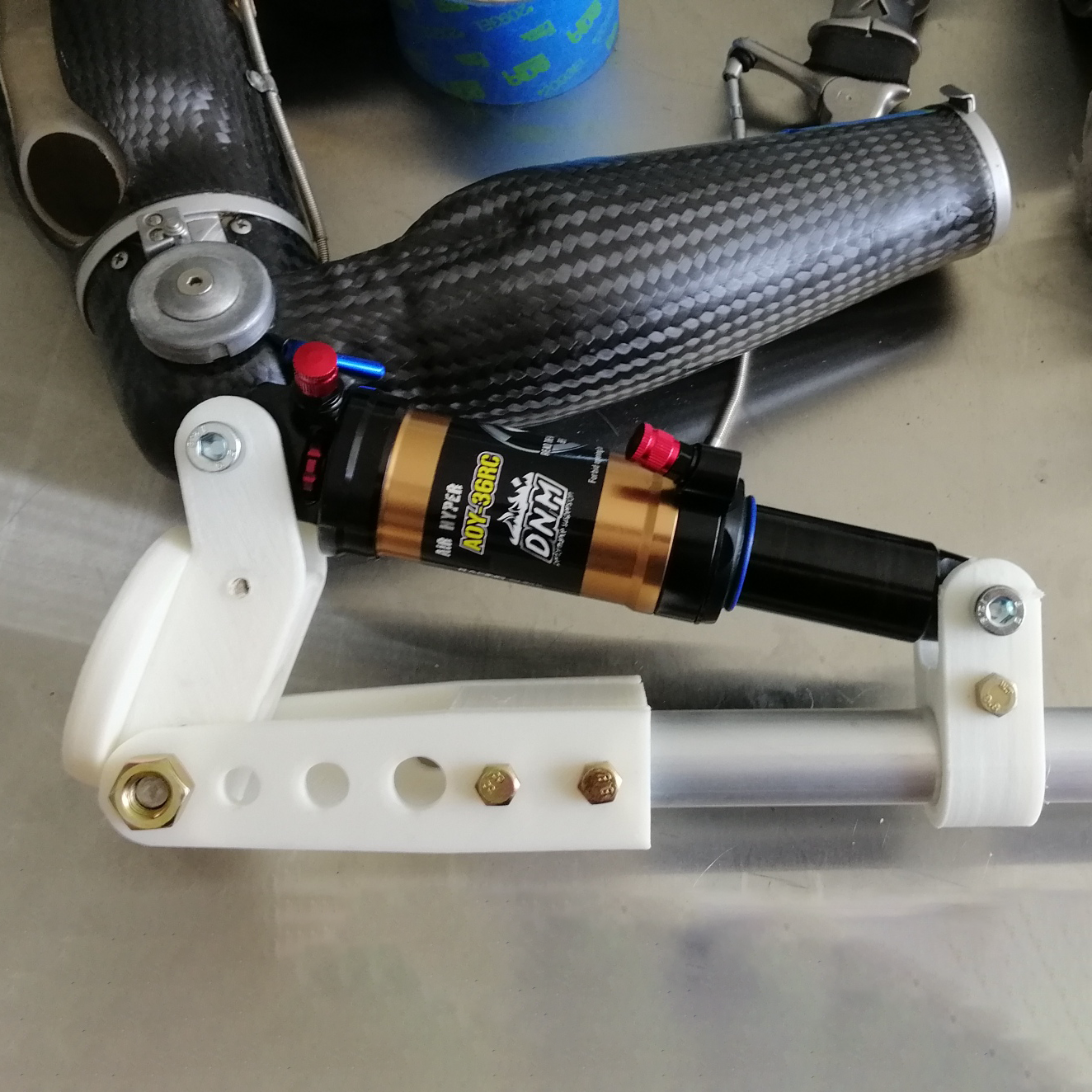
Version 1 — The First Attempt Version 1.0 of the arm was built under one rule: don’t spend any money. I needed something quickly and on a shoestring budget, so v1.0 was built around those constraints. It was a simple mechanism with very limited movement — nowhere near the range I knew I’d eventually want — but it was enough to get me started.
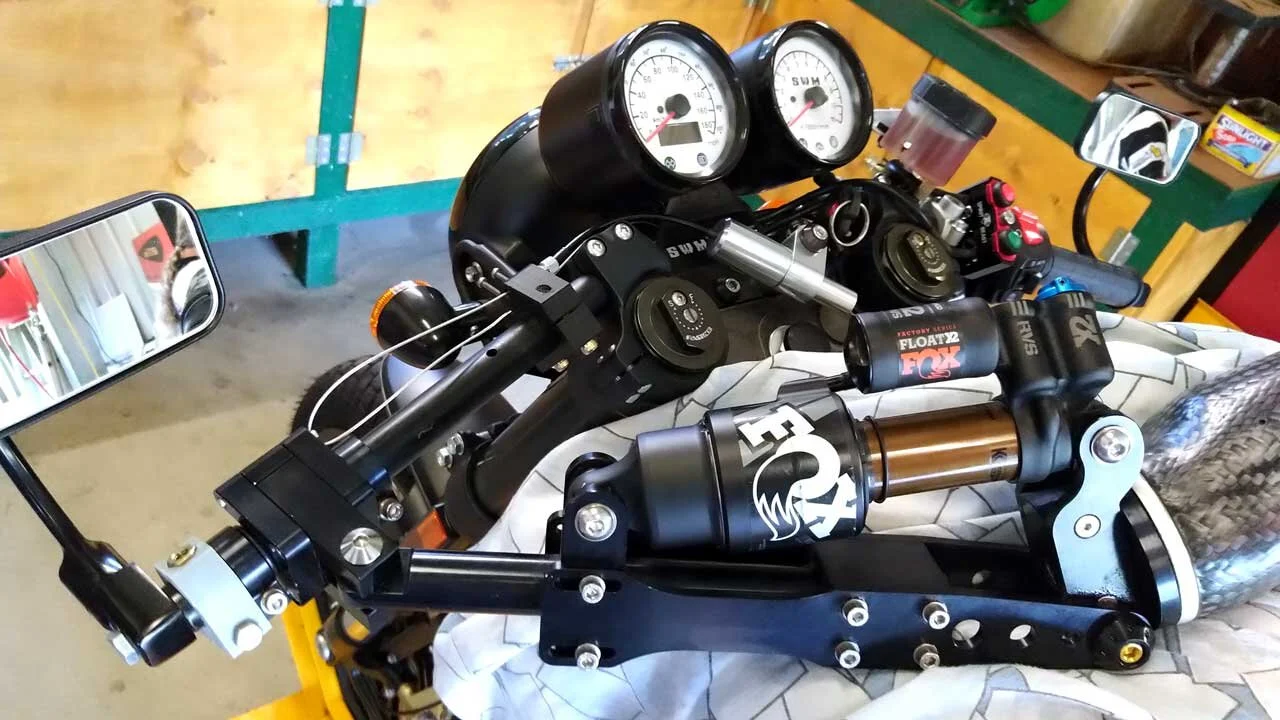
The build was as basic as it gets: a few 3D‑printed test parts, an old mop handle, and a lot of trial and error. It wasn’t pretty, but it worked well enough to begin testing. This obviously evolved into an assembly of anodised CNC-machined aluminium components. There was some adjustability in the arm that I honestly rarely used, and this was where I learned that, in my situation, having “roll” at the wrist wasn't a feature I could use adequately.
The Hand — The Real Challenge Designing the arm itself was the easy part. The hand-quick-release system was the real challenge. The first hand I built was adequate, but far from perfect. The quick‑release worked, but there was a “middleman” in the operation — a tethered pin system that relied on my right wrist to activate.
It only failed me once, releasing when I absolutely didn’t want it to while riding. Mildly terrifying, but recoverable — and ultimately the push I needed to design something better. Before that, I’d gone through a pile of 3D‑printed prototypes, a lot of testing, and a lot of failures. That’s just part of the process. v1.0 in the Real World. The hand I used highlighted a need for control over the “yaw” at the wrist; it was too loose, and didn't feel right. Thinking of it now, this hand also had loose freeplay in its grip of the handlbars. Nothing huge, but you notice the difference between this old hand's grip and the system used on the current arm.
This was version 1.0 of a homemade prosthetic arm. I can talk about these improvements that were needed now because I’m up to version 3. These characteristics weren't felt or considered significant issues at the time - I had a functional arm+hand+quick release, and above all, I was back on the bike.
The v1.0 arm and hand did exactly what I needed them to do: they got me through my licence testing. I put roughly 20,000 km on that setup without a structural failure, and it’s now retired to the workshop as a reminder of where the project started.
Pros
• Extremely cost‑effective
• Simple to build and repair
Cons
• Wrist articulation (roll)
• Limited elbow flexion
• Not the best‑looking arm
• Quick‑release system needed improvement