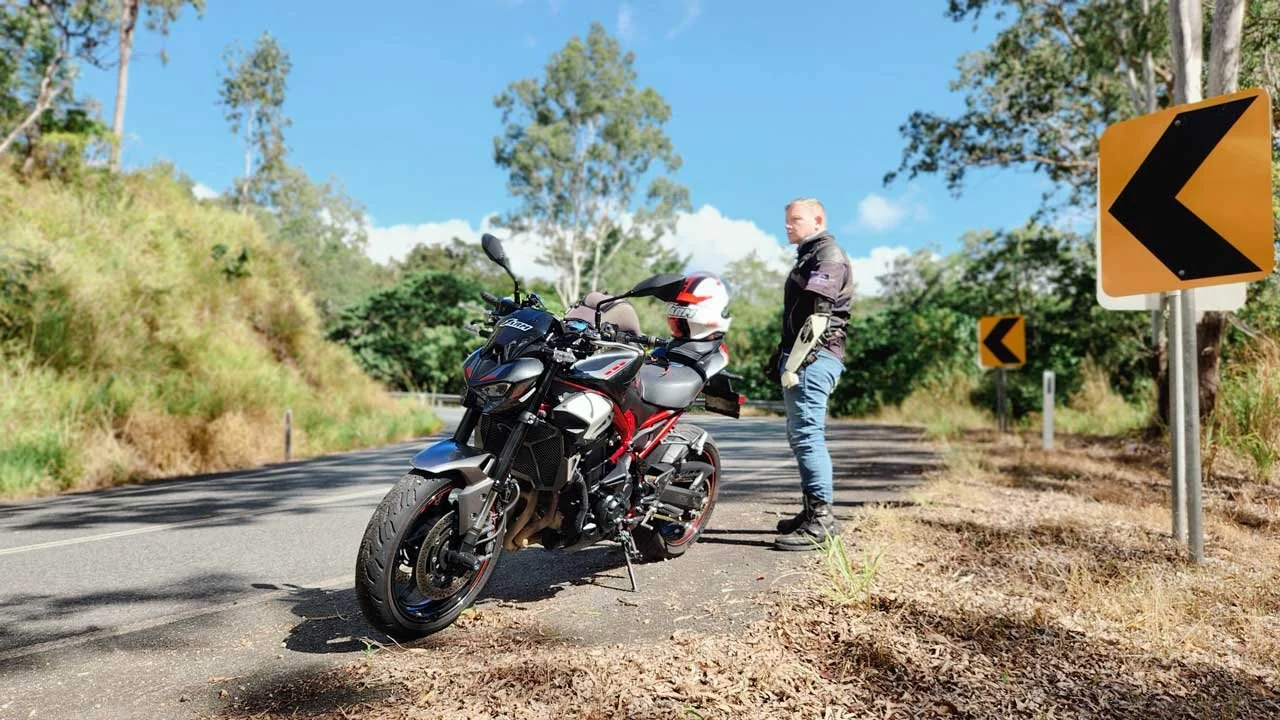
Guides & How-To

Top Questions About Riding a Motorcycle With One Arm (Answered From Experience)

When people find out I’m out there riding motorcycles with one arm, the questions come thick and fast — and honestly, they’re good questions. Riders, new amputees, curious onlookers… everyone wants to know how it works, what’s possible, and what it actually feels like. So I’ve put together answers to the most common questions people ask me about riding with one arm, based entirely on my own experience and how I’ve learned to make it work. Expect a long learning curve with a few bumps along the way, but do everything you can to tackle this from a safety perspective. Bikes are fun, and it's easy to disregard safety to keep your passion alive, so surround yourself with the right people — the people who are happy to see you back on two wheels for the long run.

Some of these questions are answered here and here.

Can you ride a motorcycle with one arm?

Can I ride a bike with one arm? Maybe. With the right set-up, preparation, guidance and practise, YES, you can ride a motorcycle with one arm. You need to be 100% sure you’re ready to ride — and that your loved ones are ready for you to ride. From there, planning and preparation, you can lose more than another arm without those two.

Legalities — I had to have my ability to ride a motorcycle assessed by a specifically trained and qualified occupational therapist. I then needed a doctor's certificate to support their outcomes, and I could then sit the standard motorcycle test that any other rider is required to sit. Your situation/location/legalities may be different — but it’s very important to check in with that side of things before you start.

How do you modify a motorcycle for an arm amputee?

I start with personal preference for the bike, then the controls — based on my capabilities. Then, lots of research on the bike, and as above, lots of preparation and planning… followed by lots of testing. Is there a bike that can't be modified? I highly doubt it. Is there a “best bike to modify”? As long as you can access all of the technical data for the bike, any bike can be modified — assuming you’re retaining the standard clutch. Going down the auto-clutch path just limits which bikes you can own/ride in the future — and adds an additional expense to your “modifications budget”.

Do you need a prosthetic arm to ride a motorcycle?

I feel like I have better control over my motorcycle when I ride with my prosthetic. However, there are plenty of riders out there riding bikes without a prosthetic. I will say, though, that most “non-prosthetic” riders only show high-speed / straight-line riding — I don't see them doing low-speed work/cornering or much manoeuvring in environments where speed can't be used to keep the bike upright. If you’re going at this without a prosthetic, get strong and healthy and maintain those levels of health and fitness while you’re out there on the bike.

How do you steer or countersteer with one arm?

I’m pretty sure that even if you still had two arms, you would only need one to execute countersteer inputs through the bike's handlebars. It's just now that one arm is doing more work. In my case, with 1.5 arms + a prosthetic, I’m using everything I have to share the physical and mental load of steering/countersteering.

How do you brake and clutch with one hand?

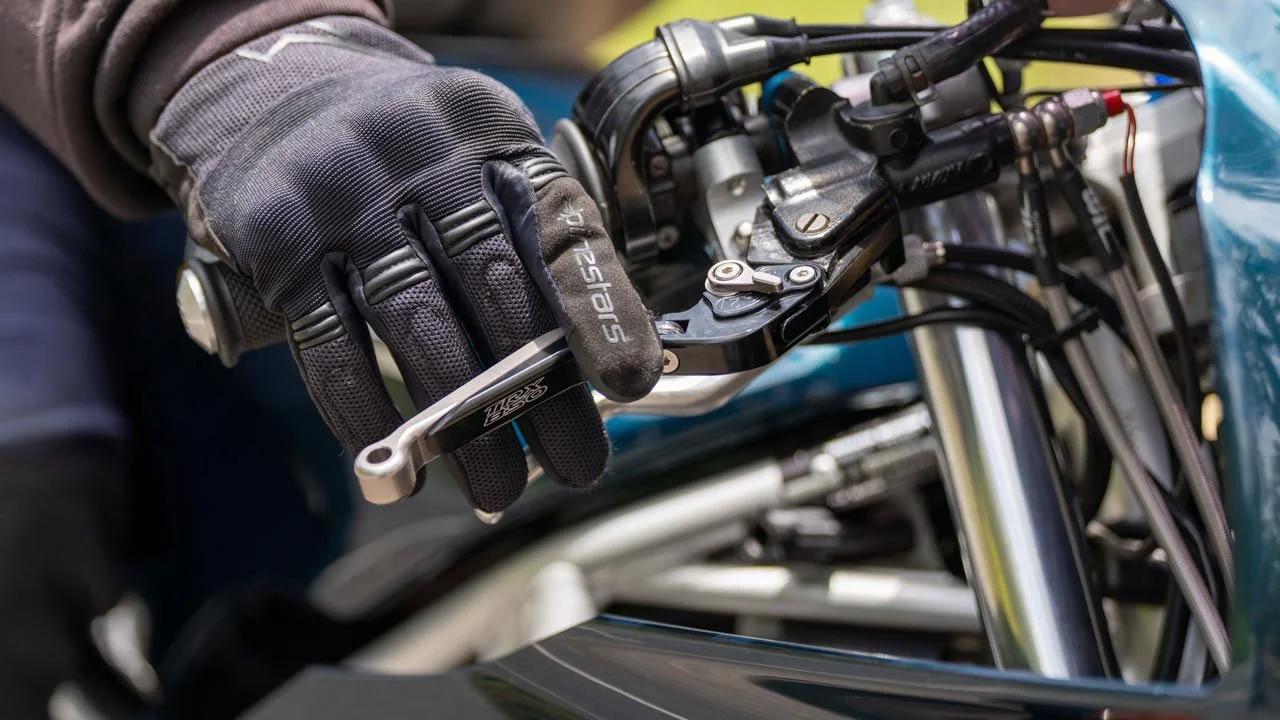
Like you would normally, with two arms. I run my clutch lever under my front brake lever. On take-off, I’m moving fingers around a bit to share the load, same when braking and coming to a complete stop. This is how I do things; you will develop a system that works for you and keeps you safe when you’re out there.

What bikes are easiest to ride with one arm?

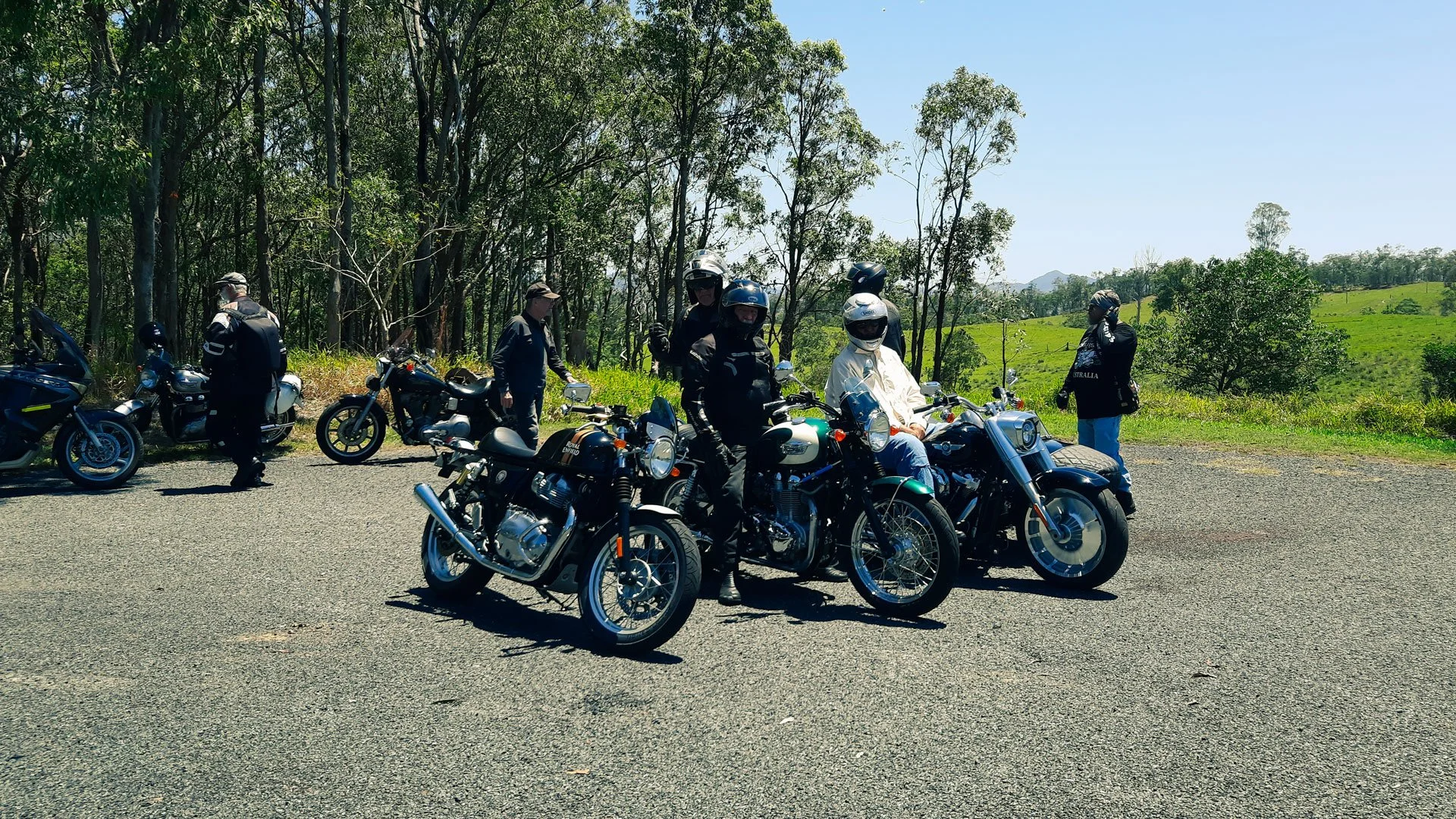
Personal preference… but I don’t feel like a cruiser motorcycle would be that easy to ride. Disclaimer: the last cruiser bike I rode was before my accident, and I struggled to ride it — my brain and feet can't cope with forward controls. When I started learning to ride with one arm, I started with a bike that had a mostly “standard” seating position — building your confidence and comfort level are super important at the early stages of learning.

My TRX 850, as an example, would not be a good starting point — riding position, heavy clutch, tall first gear = needs a lot to keep things running straight. The little SWM 440 and even the Royal Enfield, though, could be great starting points for riding with one arm — the riding position is perfect, and the bikes are easy to manage even in the worst learning situations.

Is a trike or Can‑Am better for one‑arm riders?

Personal preference, but it’d be a safe bet if your confidence or ability wasn't quite ready for a two-wheeled motorcycle. I’m unsure of the standard controls on the Can-Am, but I’m sure it could be adapted with the right thinking, tools, research and testing. When I started my arm/bike project, people suggested I go this route, but it felt like an easy way out. I feel the same regarding auto-clutches.

How do you keep a prosthetic hand on the handlebars?

The hand of my prosthetic is engaged by a quick-release clip, which will let the hand disengage at a certain point (50 kg–60 kg), or I can easily remove the quick-release clip when I get off the bike. I’ve seen all manner of “hands” for motorcycle prosthetic arms; each has advantages and disadvantages, including mine. My clip is tethered to my body, and I’ve accidentally stood on it a couple of times, breaking it. Cheap fix, and I always carry a spare.

How do you shift gears with one arm?

For me, shifting up is as per normal: roll off the throttle, pull in the clutch, shift gears, release the clutch. Downshifting is done without the clutch — slight pressure on the gear lever, quick hit of throttle and at the same time downshift. I do this so I can still use all of my fingers to operate the front brake lever.

Is it safe to ride a motorcycle with one arm?

I feel like I’m doing okay — riding a motorcycle safely — but that's after lots and lots of practise and riding a bike an average of 25,000 km–30,000 km per year since my accident. Time on the bike doesn't equal practise in my mind, though. I still do low-speed manoeuvre practice drills and at least one emergency stop practice every week. Being safe on a motorcycle is mostly a mental and/or attitude thing anyway — you can have all your arms and still be unsafe. Get your head right, do lots of practise and ride within YOUR abilities, and motorcycling can be very safe.

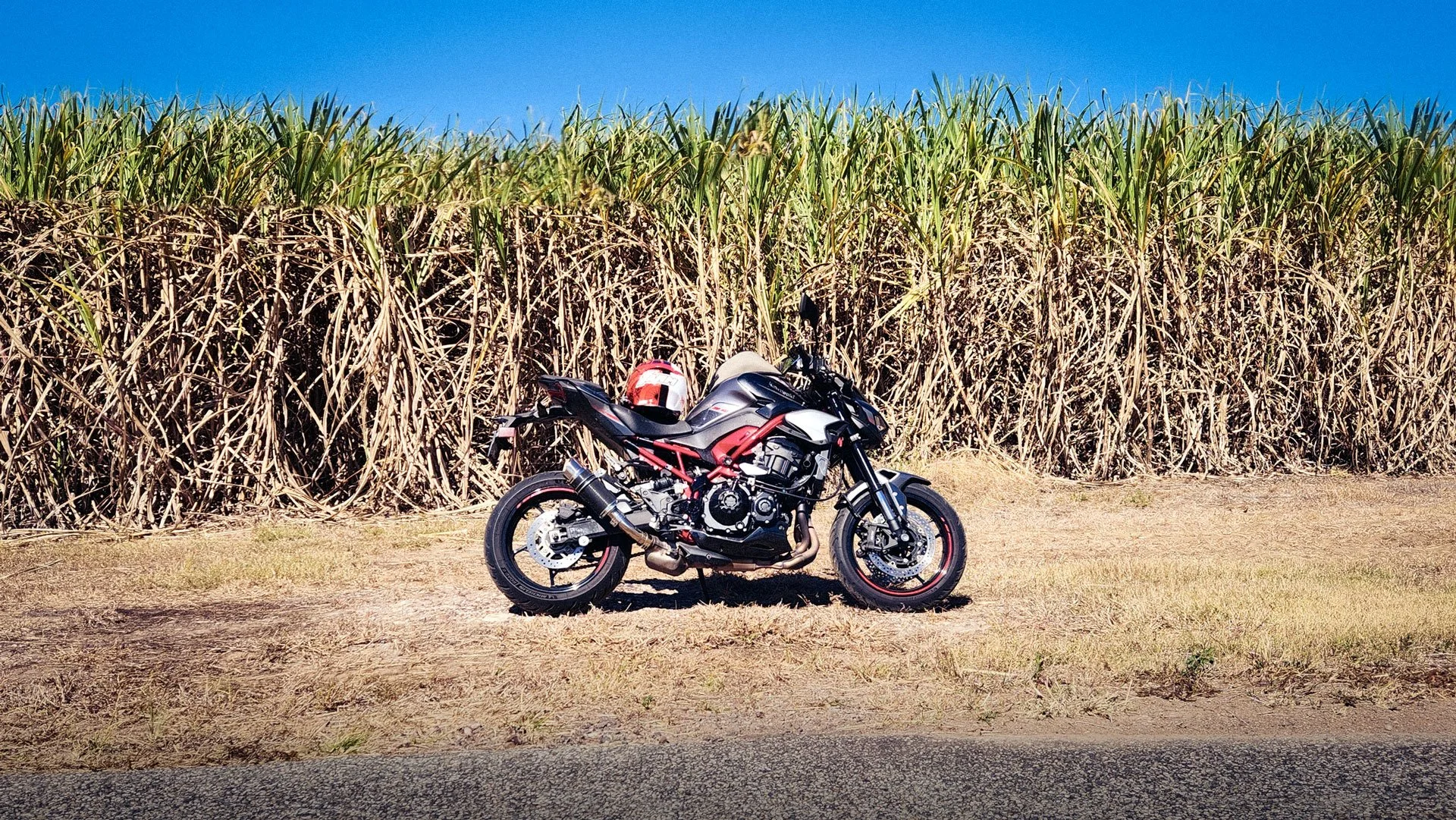
How do you ride a motorcycle with one arm?

I dont know.  I know how I ride bikes with one arm, but I’ve seen a bunch of guys do things very differently and much better than me - guys like Chris Ganley come to mind, and many more riding around out there with missing arms.  I see there's a younger guy with a complete shoulder disarticulation riding a bike really well.  It's good to see.  It means there's a wealth of knowledge in experience ready to be tapped into by riders in the same situation.  When I kicked off on my own journey to ride bikes with one arm, I didn't have access to any of this, the riders and the communities online.

From what I can see, a lot of arm amputee riders dont ride with a prosthetic, which is one way around the problem.  When I was first starting to ride bikes again, just dirt bikes, I didn't use a prosthetic either, nor did I modify the bikes in any way.  I’d just push off to get some speed up and bump it into gear.  To stop, I’d just find neutral before coming to a complete stop.  I recall my first ride on the road without a prosthetic, very soon after my accident, and I didn't use a prosthetic then either - same technique - big push to get rolling, bump into gear and off I went - on an old XJ-650 of all things, so that “big push” took some big effort considering the state of my left leg that early in my recovery.

When I finally got the green light to ride bikes again, I just assumed I would need a prosthetic and went off and designed it.  I had an idea of what I wanted/needed to ride again based on my riding experience to date, which was mostly riding bikes with two arms.  I didn't quite factor in the extent of my injuries and the limitations they presented.  Hence, my arm has a range of movement I can't fully utilise.  I didn't understand these limits until after I built the first arm and started riding properly.  Properly on the road and in traffic and exposed to more situations, environments and weather than what I’d had trundling around in a cul-de-sac at home.

In those early days, as my body was exposed to more time on the bike, muscles not used for nearly two decades having to fire and perform, left me with wild headaches and quite often, after every ride, in a fair amount of pain.  The socket and my residual limb learning to live together on long rides was also a struggle for a while.  I’m glad I managed to push through on days when I questioned whether I needed to ride again.

I do still ride my bikes without the prosthetic, but only in my yard at home.  I believe the safest way to ride my bikes is with the prosthetic.  I’m not riding in a controlled environment; I’m riding on the road, with traffic.  Those quick responses required of me for sudden changes NEED stability, confidence and good control of the bike.  It's also a legal requirement of mine to ride my bikes WITH the prosthetic, and I’m okay with that.  Full transparency, I CANNOT ride the TRX without the prosthetic - that riding position, with one arm, is bonkers when riding around my yard at home.  I’ve never tried to ride the TRX without the prosthetic anywhere else, but I’m happy with the science so far.

Explaining how I ride, using my arm, using words might be a little difficult, but I’ll give it a crack.

I connect the arm to the bike before getting on the bike - fit the “hand” over the handlebar, give the hand a slight push to the left, and then fit the quick-release clip.  Then I throw a leg over the bike.  Pretty simple.  Typically, I’ll give the arm a quick test, pushing it through its full range of movement before taking off.  This lets me know if something isn't quite right with any of the actions I expect the arm to perform when I’m out.

The quick release is a clip with a tether connected to a belt loop of my jeans.  Nothing fancy. In my first version of the arm, I had the tether attached to the glove of my right hand - not a good spot, I found.  Too much potential for accidental release.  Side note: I had ridden my bike ONCE without the quick-release tether.  The hand on my arm is loose on the bars without the quick release.  So, THAT was a spooky and very slow ride home.  I carry a spare quick release on the bike now.

Riding the bike is mostly a natural feeling, but unnatural in the sense that you’re not using your entire arm.  Under brakes, I’m pushing my left arm forward, like you would when you raise your arm up from alongside your body.  This action keeps the arm in the right place, preventing it from folding up when it shouldn't.

Into turns, I’m pushing down from my shoulder, and this is difficult to describe, but there's an initial “quick push” down (or maybe push down + slight pull back?), and then you transition into the turn; the arm begins to move at the elbow as you shift your body around on the bike and into the corner.  With the compression/rebound set right, it's not as clunky as it sounds.  The arm returns to straight smoothly enough by itself or with the same “push forward” action; it’ll come back quicker.

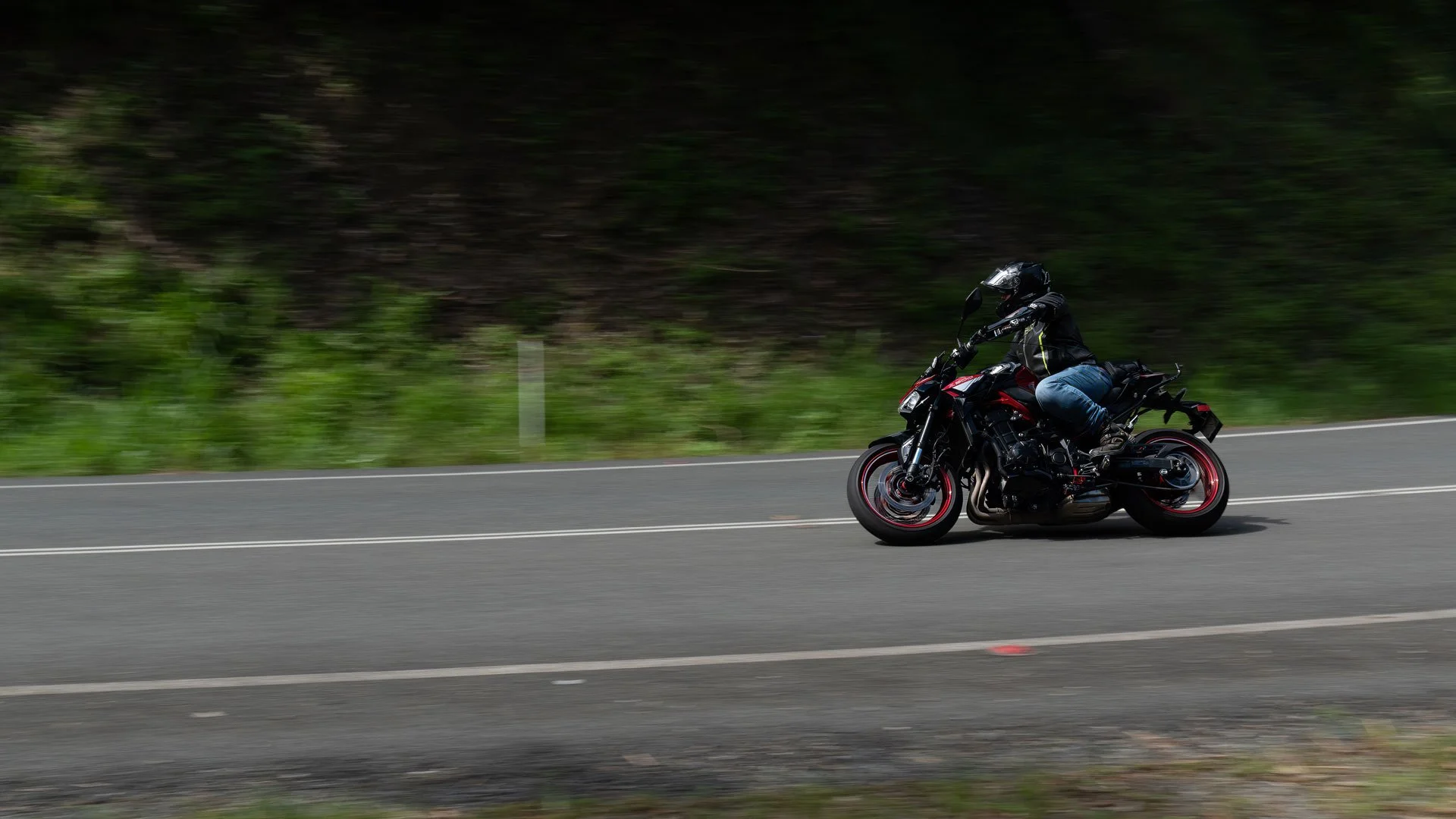
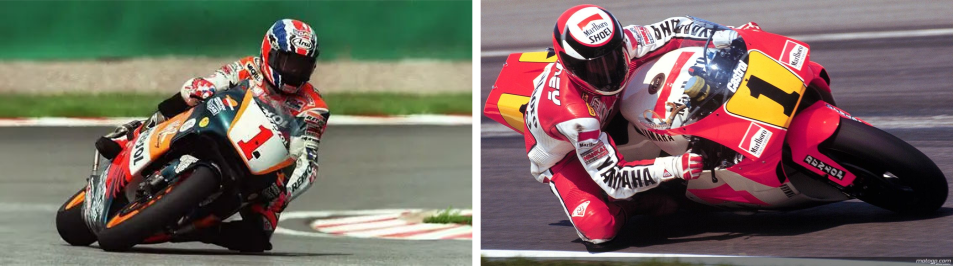
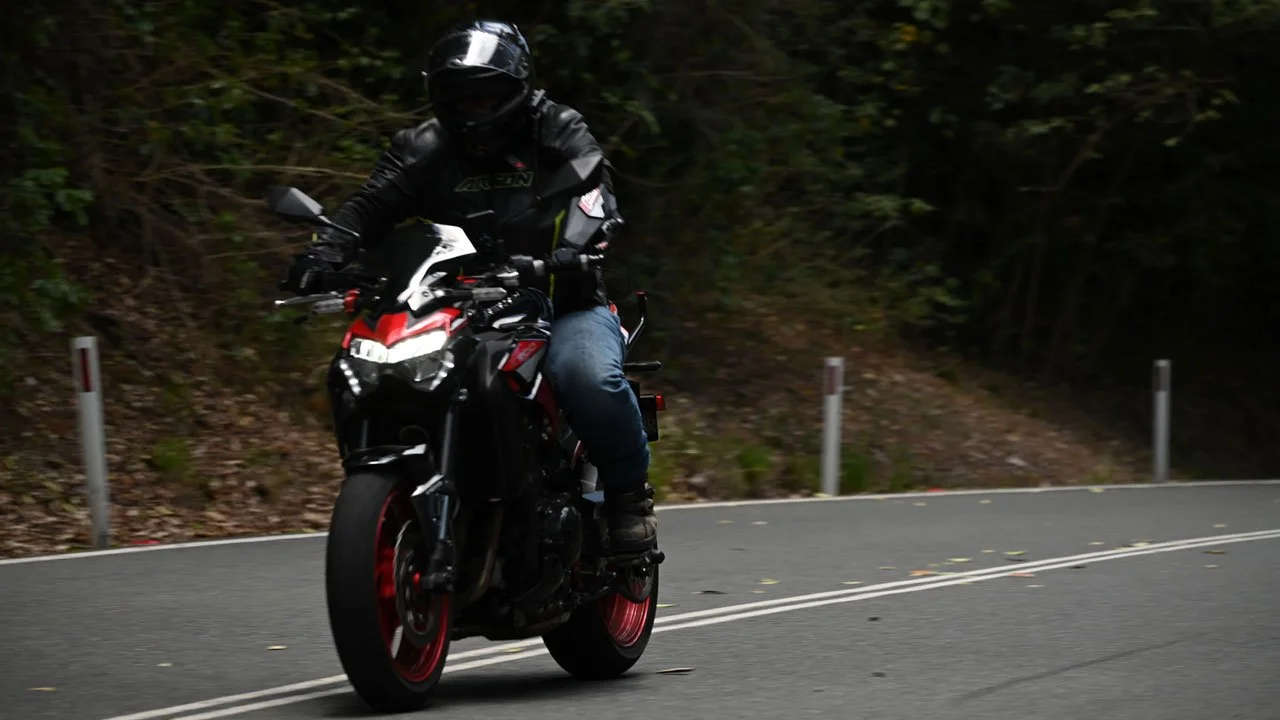
This is the best I can do to describe what I’m doing to “use” the arm while riding my bike.  I haven't had any issues, no contact between the arm and the tank while riding, though I feel I may have two different riding postures: one for left turns and another for right turns.  Left turns, I’m not leaning on the prosthetic as much as I could, as often as I should, maybe.  Right turns, pretty normal, more bend at the elbow.  Images below for reference.

Clutches and braking.  The clutch lever is positioned under the front brake lever.  Only ONCE have I gone for clutch and instead gotten a handful of brakes.  Terifying enough of a mistake that you only make it once.  I did this AT SPEED on the SWM on some crazy twisty back road, and that bike has some heckin good front brakes with no ABS.  I usually brake with one or two fingers (index and middle finger) and clutch with the last two.  The space between the clutch and brake levers is super critical - you want your fingers in there, with gloves on, without any restriction.  Also, super important are the right gloves - I think, normal rider - the top of the gloves isn't an issue.  Whereas I’m trying to feed my fingers down between two moving parts (essentially), gloves with a lot going on on top of the glove don't work for me. on. I have seen a rider running his clutch lever above the brake lever, but that was on a track bike, or just personal preference.  I’m too deep into natural habits now; I couldn't run things any differently without hurting myself.

Taking off on bikes when you’re using one hand to do two jobs is pretty easy; I use my index and middle fingers to operate the clutch, and the remaining fingers work the throttle.  And, yes, I know that means I can't do burnouts unless I nose the bike against a wall.  Which is fine because I’m a dad to a teenage daughter, and I can't afford a steady supply of tyres.

The transition from coming to a stop and then taking off again - like at a set of traffic lights - is index- and middle-finger braking, with the remaining two fingers working the clutch.  That last second or two before the bike comes to a complete stop, I’ll move all four fingers to the clutch, relying on the brake to bring it to a stop.  Then, for takeoff, I’ll release the clutch enough so as to keep my index and middle finger on the clutch lever, then slip my other two fingers behind the clutch lever so I can use those fingers to work the throttle.  It all happens and feels much smoother than I’ve made it sound with words on a screen.

Wheelies - can I do them? Only on accident, and it's always the bike and not me, officer.  Seriously, I haven't tried to wheelie the bike outside of accelerating abruptly and savagely, knowing that's what the bike will do.  I’ve not done what the cool kids do and just lift the front wheel like it's nobody's business.  I’m just not that cool, and I’m not interested in the consequences of getting it wrong.

Switching bikes is something of a readjustment - both for my brain and my arm.  Today, I dusted off the TX and took it for a quick ride, and it was awkward as all heck.  First up, I’d just gotten off the Zed, and my brain needs five business days' warning before switching bikes.  Second, I do make a small adjustment to the arm between the TRX and the Zed - the roll position of the wrist is slightly different between the two bikes.  I have the two positions marked on the arm, and it's only about 5 degrees of rotation, but the effects are night and day.  That TRX is a great old bike, though, a short ride to blow the cobwebs out brought a big smile to my face.

The TRX is old-school; you have to rev-match your downshifts, so let me walk you through it.  Under brakes, my index and middle fingers are working the brakes, and my remaining fingers are working the throttle - we’re doing rev-match downshifts without the clutch!  I’m yet to blow up a gearbox or bend a shiftfork, and the only issue I have is an easy one to fix because it's my technique - I “tap” my gear lever, not “push” my gear lever on downshifts.  So, mostly on the Zed, second into first, can see me hitting neutral.  I think, from memory, the SWM would give me a surprise neutral between 4th and 3rd downsifts - again, I’m “tapping”, not “pushing”, the gear lever.  I’m working on this; it's a me thing, not a bike thing.

Controls like indicators, etc., are just extras, and that's where it's my thumbs time to shine.  It's probably the busiest digit on a normal ride. I have these crazy ideas of outsourcing some of my thumbs' work to another part of my body (not that part) or to the prosthetic, but I’d just be adding complexity to a system that doesn't really need it.

There’s probably a video that needs to be made to add visuals to all of this, but that’sabout it for how I ride my bike with one arm + one pretend arm.