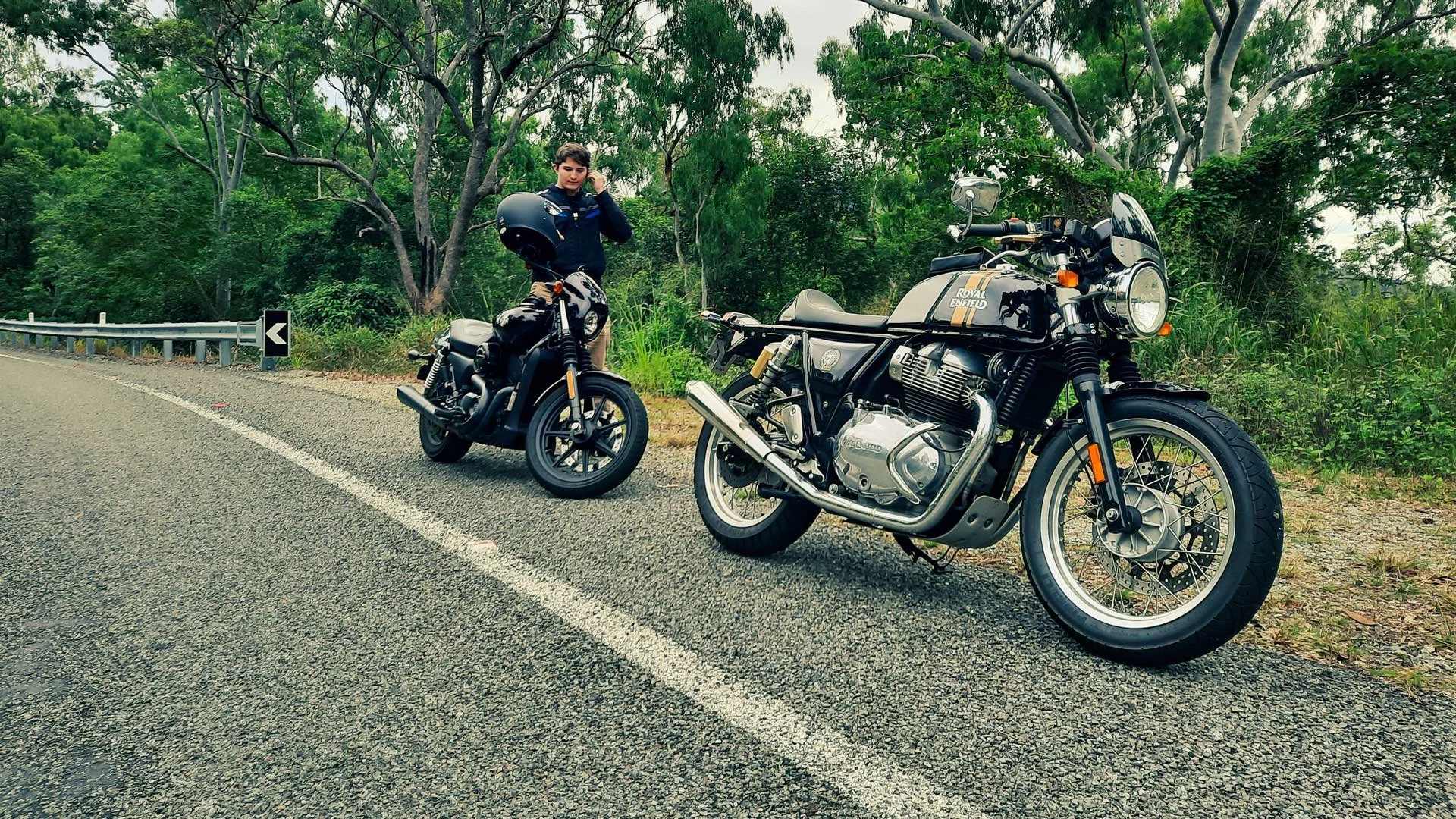
Looking back at how I learned to ride, it feels like I’ve lived through three separate chapters. Each version of myself thought he had it all figured out, only to be proven wrong. It’s funny now, but it’s also why I care so much about rider education and don’t believe the usual stories about learning on dirt bikes or racing motocross.
I’ve been through all of it, and I’ve faced the results of thinking that was enough.
Hill Billy riding school
My first riding lessons were just what you’d expect for a kid around bikes: mostly unsupervised, sometimes watched over, but always with care. My dad tried his best, and after a few years tearing around the farm on my old chook chaser, I could ride a motorcycle. But farm riding only teaches the basics like throttle control, balance, and how to crash without admitting it hurts. It doesn’t teach you how to handle traffic or understand risks.
It definitely made me confident, but it also gave me a false sense of skill. That combination can be risky.
I cringe a bit when I hear riders repeat clichés about learning off-road or racing dirt bikes. I’m not saying that experience doesn’t matter—I get wanting to share your riding background—but often it’s outdated, limited, and only partly useful for riding safely and enjoying motorcycles on the road.
To be fair, I was that guy once, too. No judgment.
The Old Licensing System
Back in 1993, getting a motorcycle license in Queensland was simple. There were no requirements beforehand—just a short written test, some basic moves in a car park, and a quick supervised road ride. No one gave detailed feedback; you just had to avoid making big mistakes. There was no focus on hazard perception or how to handle risks on the road.
I was happy with that at the time - didn't care, got my license.
Now I wonder how many other riders got their license the same way, without learning solid skills or how to be safe on the road. Sure, they’re still riding and probably still have both arms, but are they the ones who think every car driver is out to get them? That negative attitude is something we’ve all seen in riding culture.
The Accident and starting again
Fortunately, my brain adapted very quickly to riding one-armed. It's easy when you don’t have a choice. So, re-learning was more about putting my new attitude toward riding into play. That and learning how to operate the bike with only so many fingers; clutch, brake and controls. There were constraints: there was no more farm to ride dirt bikes on, so I had to develop the skills I could in the cul-de-sac out front of my dad's house. Fortunately, that meant all slow-speed practice and getting comfortable going slow. Fortunately, because at that stage I was still testing with an arm cobbled together from an old broom handle and 3D-printed plastic parts. In the three months of “testing” and all this slow riding, I don’t think I ever went over 40 km/h. Most riders avoid this stuff, riding slow, but I feel it's the best foundation for riding. You’ve got to be more in touch with the bike and its controls, and it exposes small weaknesses early before they become big problems once you’re at speed. If you’re new to learning, it can be humbling at first, but it builds confidence quickly with minimal risk.
The Occupational Therapist, Qride and the great unlearning
This was after my big accident, so it won’t apply to everyone, but before I could move on to motorcycle testing, I had to pass a motorcycle test. This was an OT assessment to check if I could ride safely. They did a medical and physical exam to see if my body could handle it, and a perception test to make sure my mind was ready, all before I could show my riding skills. I was grateful for all the practice I’d put in before this assessment.
Q-ride was 10/10 though. People who have issues with Q-ride need to think more about other riders more than themselves. That, and maybe admit that they DID come out of Q-ride just a little bit better than when they walked in. The benefits of programs like Qride, even to those sceptical of these programs, are that there are MORE riders on the road, and they're safer because of it. I’m happy to ride the way I ride, and I’m happy to see a rider fresh into it riding safely and within their own limits, enjoying the benefits/outcomes of whatever training they’ve completed.
While going through the Qride system in Queensland, I got rid of a lot of bad habits I had before my accident. Some habits you don’t notice until they cause problems, and sometimes learning a small new skill can make riding much easier or more comfortable.
Unlearning/relearning is much easier when your mind is open to it. Losing the arm wasn’t the key to opening my mind to training programs like Qride, and while most of my openness to learning came from the research into my arm design, the bulk of it came from the simple enjoyment of riding. A few seemingly simple skills and the abandonment of some bad habits took a lot of the noise out of the already busy experience of riding a motorcycle. I get to enjoy the time on the bike a little more.
Like father, like Son?
I was deep into relearning when my son decided to start riding motorcycles. I wasn’t fully licensed yet and was still working on my arm design. I have to admit, I panicked.
Maybe it’s just a dad thing, but my first thought was, “You can’t just decide to ride motorcycles.” I used to think riding should be part of your life before you hit the road with others. That old mindset came back, and suddenly I believed you really did need that ‘I learned to ride on a farm’ experience to be a good rider.
I didn’t hold him back. Instead, I supported him and helped him prepare for his test, even as I was still learning myself. Once he got his license, just a few months after I did, I kept encouraging him to ride with me. Skills matter, but you have to keep practising and building on them. My son will find his own style, but keeping those skills sharp is key to his confidence, passion, and most importantly, his safety.
We’re all still learning.
Every rider learns in their own way, and that’s fine. Roads and risks are always changing, so I’ve found that staying curious and practising often helps me ride with more awareness and confidence. It also makes the ride more enjoyable.
If you’re happy with your progress, that’s up to you. I hope you’ll support others who want to improve at their own pace. Share what you know, learn what’s helpful, and let’s all help each other stay safe.