Brains and arms
The mental aspect of doing anything with one arm, when all you have is one arm, is the easy part. If you dont fight it. Shake that part loose, and then you can focus on the task in its purely mechanical form - how do I hang onto this while I do that? It takes the bulk of the frustration out of any task. Tasks are still frustrating until you’ve developed a system, and/or practised it enough times.
When you have two arms and you’re trying to perform a task (that requires two arms) with one arm, there’s an internal friction. It takes effort to truly commit to completing the task and overcoming the friction your brain is creating.
I think this is why people (with two arms) see some of what I do as either “awesome” or “dangerous” - it's typical at the extremes of the spectrum. He shouldn’t be doing that, or, how cool is it that he’s doing that?
Prior to my accident, in my brief career with the military, my section mates and I would practise tasks using one hand… and blindfolded, etc. I remember that struggle, with my brain fighting to use both hands to reassemble my rifle. It was a bit of a head start for how my life changed, in a lot of ways, not just performing tasks when your arm is missing.
Brains, arms and bikes
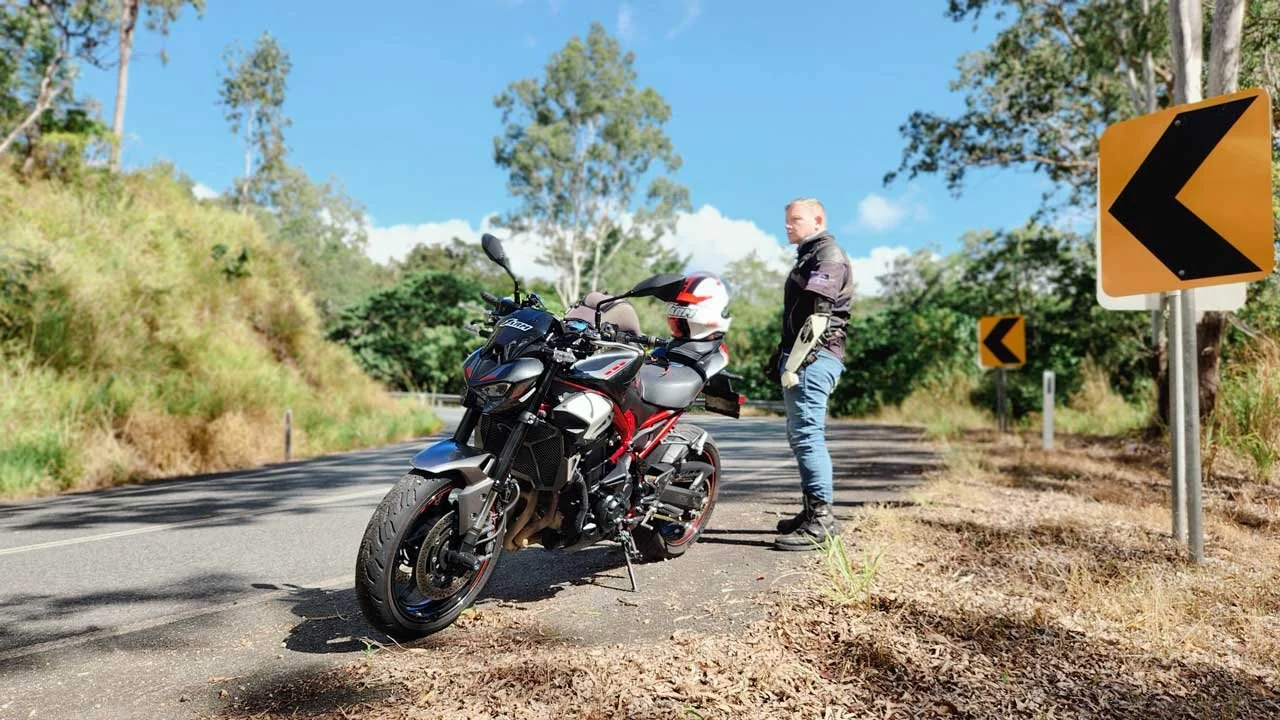
I remember the first time I rode a motorcycle after losing the arm - off-road, dirt bike, no prosthetic, bike unmodified - and my only struggle or fear was stability under brakes. Which turned out not to be an issue; controlling the bike didn't feel like it required any extra effort. Clutchless downshifting was seemingly instinctual, no extra thought required. Prior to my accident, I had never done a clutchless downshift, and had you suggested such a thing to me back then, I’d have thought the idea was ridiculous.
My first ride on a modified bike, with the clutch now on the right-hand side, was without practice. No, sitting there trying to get my hand and brain to operate the throttle and clutch simultaneously. No extra mental effort required. There was a struggle to operate the controls (lights, indicators, etc), but nothing that practice and time on the bike didn't solve. Regardless of how well you’ve set the bike up, you still need seat time to get everything, including you, to work well and naturally.
Trauma
I recall that for the first year or so after getting my motorcycle license, when I was getting ready to ride and putting on my boots, I’d get these terribly vivid mental images of crashing. This would be accompanied by a very real feeling, akin to a light concussion. Pressure in the back of my head, a little dizzy maybe. It was pretty overwhelming, but nothing I couldn't push through. I remember doing a LOT of riding back then, and every ride I’d push through all of that. It doesnt happen much at all anymore, but the days when it does and it's bad, I see it as a “gut feeling”, and I dont ride that day. That might be the trick to overcoming any feelings like this - identifying what really feels like a true gut feeling and what might just be an echo from something earlier, prior to your ride. I definitely take time to process these pre-ride feelings now.
Expectations
My expectations of my riding ability and behaviour are pretty steady, with some fluctuations because I’m human. My riding ability is good, and my skills on the motorcycle are now well developed. If anything, I’m all about taking the edge off some bad/lazy habits. So my expectation of myself while on the bike is for gradual improvement, however slight; just recognise bad habits, call them out to myself, and adjust slowly.
There are people who expect me to make a mess of it again, riding motorcycles. The “I told you so” crowd is waiting for me to go tits up again on the bike. There are those who may have seen me do something silly once and now assume that's how I ride everywhere I go. These same people have typically had more speeding tickets than I have since being back on the bike. That, or they’re non-riders who don't understand the depth of my passion for motorcycles and motorcycling. Easy to ignore while I’m focused on myself and what I can control.
Eyes forward
Maybe the one thing learning to ride again with one arm has taught me is the same golden rule of riding a motorcycle: look where you want to go. If you simply maintain a focus on improvement, not get caught up in the what-ifs or what others think of you riding again, the small stumbles and errors that invariably occur are easy to overcome. And, if you pace yourself right, those stumbles and erors dont end badly. It's not a smooth or linear progression; some days it's heavier, and others it's smooth. Just keep looking where you want yourself and the bike to go.