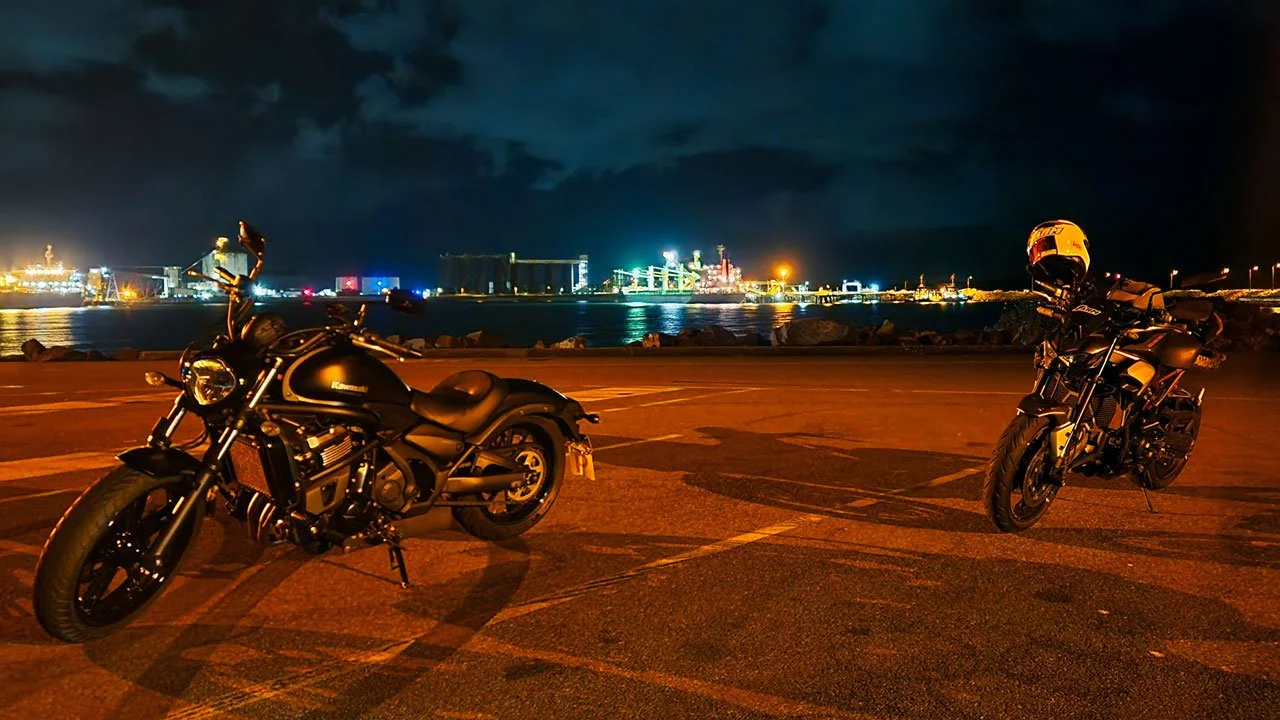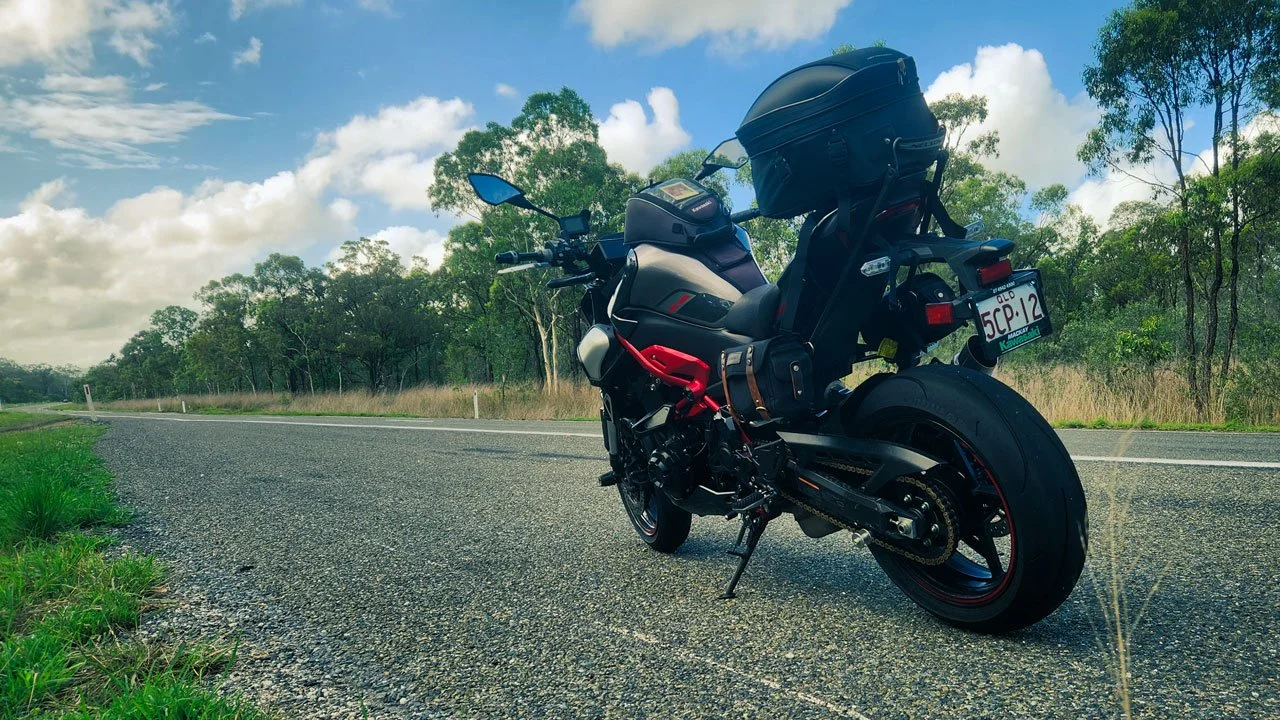
I have a 2,200 km round trip coming up in the next few weeks, and I’ll need to prepare the bike and my gear and get physically ready. The bike-and-gear preparation is simple enough; we don’t need two arms for that, and we all pack and set up our bikes differently. I won’t dwell too much on the bike or the gear. This is mostly about getting my body—my shoulder mostly—ready for the ride.
Packing and Bike Prep
This will be my tenth long ride (2000 km+) as an amputee and my fourth on the Zed. The bike and I get along well over long distances. I travel light—typically a backpack, a tail bag, and a hydration pack. I use two very small bags strapped to the side of the bike: tyre repair gear and a compressor in one, and tools and repair consumables in the other.
I’ll give the Zed a good bath, inspect, clean, and lube the chain, and check/top up the fluids if necessary.
Prosthetic Arm Prep
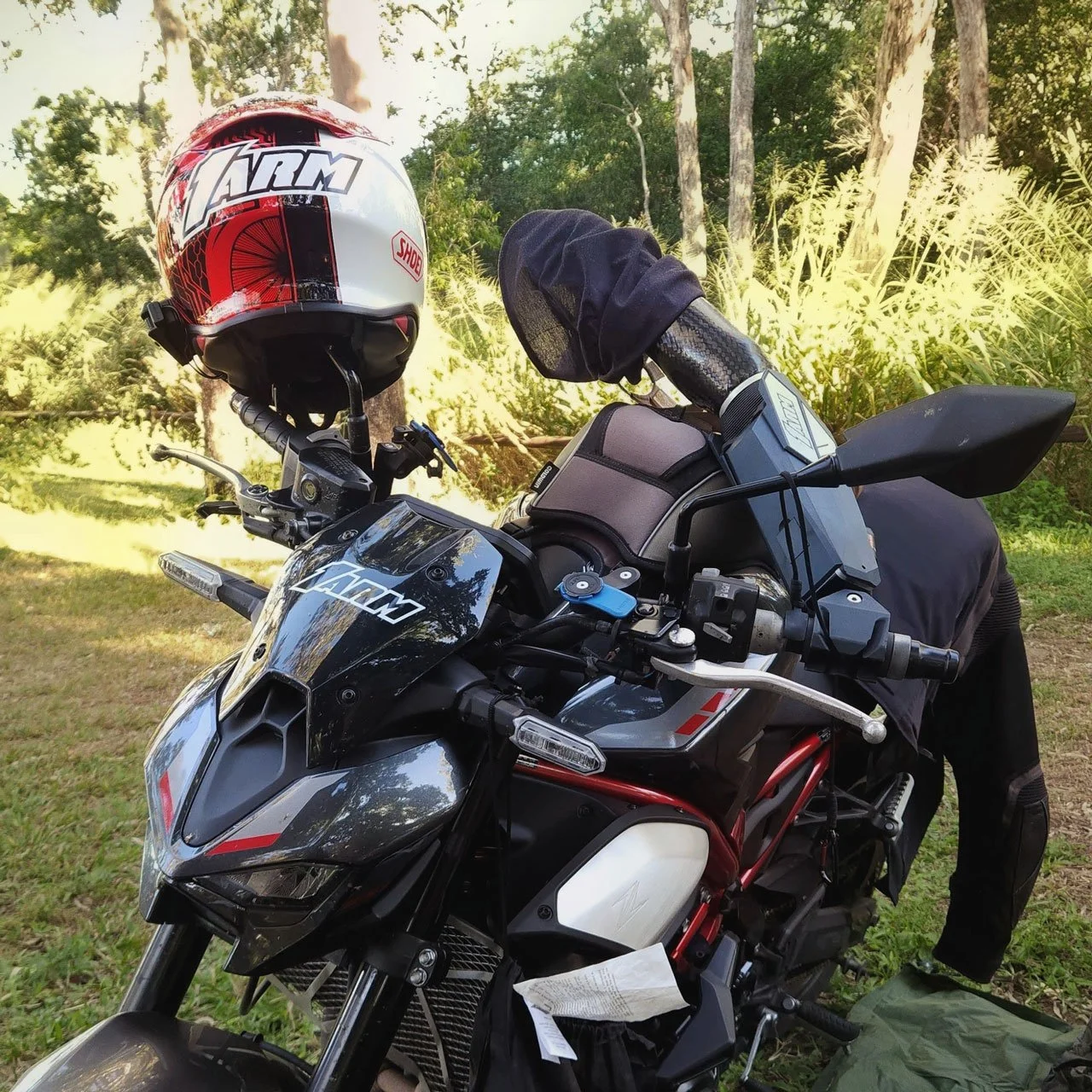
The arm I use for riding has been on all of those rides, and it’s held up faultlessly—no adjustments or changes required there for long rides, other than an inspection and a thorough clean. I had the arm apart today, replacing the plastics, and gave the internals a good look and clean. There are pivot points in there that typically require a strip down and re-grease, but today everything looked good. I cleaned the socket out with warm soapy water and rubbing alcohol, then cleaned and inspected the strapping.
Residual Limb Checks
My short arm/residual limb will be in the socket of my riding arm for up to 12 to 14 hours. In the Queensland heat, on bumpy Queensland roads. So the first thing to do is make sure my short arm doesn’t have any serious wounds or injuries—nothing small that could turn into something serious halfway through a long ride.
What makes this so important is that I can’t often feel small wounds or injuries to my short arm—the potential pain isn’t my concern; the risk of infection and complications is. Visual inspection is usually all it takes, though I do a more physical check after my last X-ray showed decreased bone density—exposing the metal pin that was inserted after my accident. My doctor hasn’t raised it as an issue, but the thought of things going wrong in there sometimes rolls around in my head.
Training and Physical Prep
My current exercise routine has suffered recently. I typically train three nights per week for martial arts. Work and parenting commitments have seen me off training for the last four weeks. Fortunately, my morning exercise routine has not faltered, and that “should” see me through the upcoming ride.
The focus of my exercise is core strength, joint mobility and stability—my physio has me doing a fair amount of regular exercise to reduce the recovery time of my usual martial arts training. Not a lot of exercise for my short arm; reduced movement due to a brachial plexus injury means I don’t have much to work with.
Pain Management on Long Rides
The main pain I “feel” on a long ride is in my left shoulder; a dull ache, maybe, and if I don’t put my arm on correctly, I’ll get pain from the socket rubbing on my shoulder. The latter is far worse and can be difficult to manage if I don’t catch it soon enough.
The dull ache can be managed through movement while riding—by moving the riding arm through its range of motion and/or holding a different position for short periods. I can stand almost fully upright while riding, with the riding arm still attached—this occasionally gives my short arm and my butt a well-deserved break.
Phantom Limb Pain
Phantom limb pain usually does its own thing on long rides, neither better nor worse. However, I tape up the opening in my socket to reduce wind and cold aggravating phantom limb pain. Cold does create a sensation or pain, but it’s more “phantom limb pain adjacent” than it is actual phantom limb pain.
Right-Side Load and Strength
My right shoulder has never complained on long rides, and I have no wrist or hand pain—my right arm/shoulder is pretty solid, and I put that down to training and a whole bunch of one-armed push-ups.
Ride Plan
I’ll be doing this ride, from home to the intended destination, in one day—1100km. On the Zed, that’s four stops for fuel. Total time on the bike is about 12 hours, which is manageable given my current riding fitness level.
Hydration and Food
Hydration is critical, so I’ll be drinking a lot of water at each fuel stop and avoiding caffeine. I don’t typically eat a lot, and do my best to avoid junk food, but I’ve found a good balance of carbs and protein keeps me alert enough for long rides—nothing heavy on sugar. Quality beef jerky, pistachios, and dark chocolate are my go-to snacks.
There’s this rumour that I eat a lot of Chiko Rolls, but it’s only half true—Chiko Rolls are NOT a long ride food.
Stop Discipline
Quick stops—no being a tourist and no stopping to smell the roses. I need to be at my destination in time to unpack, clean up, and rest. I’m not much good at being a tourist in the first place, so this doesn’t bother me.
Why the Long Ride?
I’ll be completing the practical component of my training to become a motorcycle instructor. This isn’t part of a career change; it was simply one of the personal goals I had set for myself after a disastrous 2025.
Supervising learner riders is something I enjoy and do to improve the safety culture in motorcycling in my state, to lead by example, and to be a better influence for new riders. The training will help me better deliver guidance and help riders build confidence as they start out riding motorcycles.
The state I live in, Queensland, is reported to have had the highest number of motorcycle fatalities in Australia for five consecutive years. My experience is that new riders aren’t getting the best influences in the early days of their motorcycling career.