Lead By Example: The Riders We Become, The Riders We Create
A thought that’s been rolling around in my head lately is that old line: “If you can’t lead from the front, lead by example.” I’m pretty sure a corporal threw that at me once, and it stuck. Back then, it had nothing to do with motorcycling, but the older I get, the more I realise it applies to almost everything — especially riding.
I’ve been doing a lot of thinking lately. My brain is still finding its footing after surviving 2025, and with the way the motorcycling community has been heading in 2026, that “lead by example” line has been stuck in my head like a thorn. It keeps making me ask: what examples are we actually setting as riders? Which ones are we following? Which ones are we passing on? And which ones shaped us long before we even realised it?
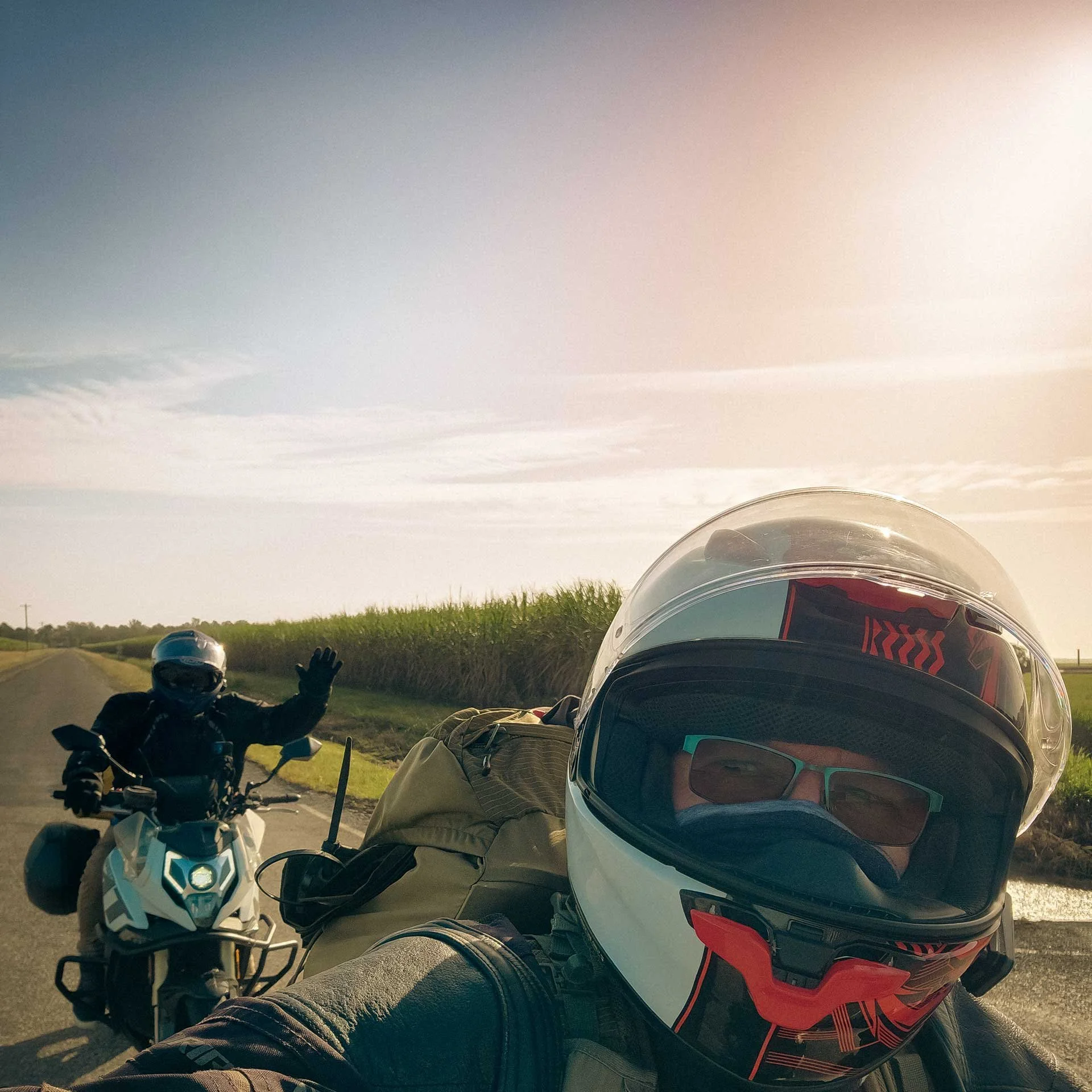
This whole word salad started after a camping weekend with my best mate, Caine. I met him years ago when he posted online looking for a learner supervisor, and we’ve been mates ever since. He’s a good bloke, and his riding is what it should be — confident, capable, calm. Not perfect, but no rider is. What matters is that he learned by watching me ride and listening to me babble on about motorcycling from my perspective. I didn’t “teach” him much. He learned by example.
And that’s what’s got me picking at this “lead by example” thorn tonight. Because the examples most riders have access to today aren’t the ones that help you build a long life on a motorcycle. High risk is sold as cool, consequences are hidden, and the attitudes being pushed are completely wrong for anyone who wants to ride into old age.
To be fair, the example I grew up with wasn’t perfect either. My dad taught me precision, technique, how to understand the bike, how to feel what it was telling me, how to brake properly, how to shift properly — all the good stuff. He taught me how to fix the bike, too. He did an amazing job. But I also grew up listening to his stories from his younger days — fast riding, dangerous riding, riding with no regard for the law or safety. And when you’re young and obsessed with motorcycles, those stories are cool as hell. That was the example I carried with me when I got my licence.
Even today, post‑accident, when I ride with my dad, things can still get a bit spicy. Neither of us is perfect. My first ride after the accident, with my v1.0 arm, was borderline “lose the other arm” territory. Funny how that works — both of us intimately aware of what happens when you ride a certain way, yet still riding that way. But in the six years since that first ride, a lot has changed. We’re both older, slower, and the echoes of all the research I did while designing the arm never really left my head.
That research — the crash studies, the biomechanics, the physics of what happens when a body hits the road — became my new “lead by example” after the accident. I spent a lot of time watching crash videos and reading research papers about what actually happens when you come off a bike. It wasn’t fun, but it changed me.
Then there was Q‑Ride. People love to criticise it, and I’m not saying it’s perfect, but I got a lot out of it. Before I did my pre‑learner course, all I’d done was slow‑speed practice. I still love that stuff, and I still practise it on every bike I own. When you get slow‑speed control sorted, it takes so much of the static and stress out of riding.
Q‑Ride works when you get the right instructor. I was lucky — I had Brett. He had the skills, the communication, and the patience to fight through my bad habits and help me adapt everything to one arm. Beyond that, he was someone you could have genuinely insightful conversations with about road safety and rider behaviour.
Brett’s example set the standard for how I try to lead by example now, especially with learner riders. I want to pass on skills, but not just the actions — the purpose behind them. Skills matter, but attitude matters more. The right attitude keeps you within the limits of your skills. The right attitude keeps you out of trouble with the law and the wider community. The right attitude keeps you out of the hospital.
And that brings me back to the examples young riders are getting today. The internet is full of “examples” — and they’re the thorn. Kids watch some internet hero riding in a way nobody should be riding. It’s glorified. It gets clout. It gets attention. But the message underneath it is completely wrong for anyone who wants to ride long‑term. You only see the highlights — the best of fifteen takes. You don’t see the screw‑ups, the injuries, the damage, or the lack of actual skill behind some of it. And it’s always wrapped in some edgy caption to make it look even cooler. It’s not even a real example, and it’s still a bad one.
Kids and new riders eat that stuff up. They buy the bike and chase the clout without thinking about the risks or consequences, because they don’t see them. And even if they were shown the consequences, I doubt many young riders — especially young men — would fully understand them. Some of us, myself included, only learn through pain. But I honestly believe that a shift in attitudes toward risk and consequences will only come from the motorcycling community providing better examples.
We all arrive at motorcycles with some kind of attitude. It’s the examples we follow that shape that attitude as we go deeper into riding. And that’s what all of this is about for me. I want a shift in attitudes — in riders, in the motorcycle community, and in the wider community. I don’t think flashy ad campaigns, tougher laws or more restrictions will fix anything. We need a cultural shift, and that starts with the examples we set.
I don’t have sway over the whole motorcycling community. All I can do is maintain my own skills and set a good example when I’m out riding — especially when I’m with learners or new riders. Not to baby them or turn every ride into a lesson, but to find the balance between fun and safety within their limits. On paper, it sounds like I’m not “riding my own ride,” but when you’re around learners, you have to find their comfort zone and ride in it with them. Don’t push them out of it. Let them grow. Guide them while they do.
That’s what’s worked for me.